don’t do these 7 things when your child throws a tantrum

angryboyWithFists

Ah, tantrums. Aren’t they fun? When tantrums first start — somewhere between twelve and eighteen months, give or take — they’re actually kind of cute. They mean your child isn’t a baby anymore. He’s forming his own opinions and learning independence and stuff.

Actually, I take that back. They’re not cute at all. They’re awful and loud and scary. They’re like a colicky baby, only louder and bigger, and with the added fun of feet kicking at your face and little teeth biting your arm.

It’s just that in retrospect, after you’ve experienced REAL tantrums, which is when your three year old screams for three. hours. straight until you lock yourself in the closet to escape it, you look back on tiny toddler tantrums and think they’re kind of cute.

But either way, it’s hard to know what to do with tantrums. Especially when they first start. You’re used to doing everything you can to keep your baby happy, and after a year of practice, you’ve gotten pretty good at it. And then you wake up one day and you don’t have a baby anymore, you have a toddler who cannot be made happy no matter what you do.

I am still learning what to do. But I can tell you what not to do.

1. Ignore it. I know, I know. All the experts say to ignore tantrums and they’ll go away. Trust me on this one: they’re wrong. Or at least they were wrong for me. Maybe ignoring it will work for your kid. But just try to ignore my kid while she’s throwing a tantrum. I dare you. She will follow you around hitting you, pulling your hair, and trying to climb up your body so she can gnash her teeth in your face. This is not easy to ignore.

But feel free to try.

2. Give in. This is one where the experts are definitely right. Don’t give in to tantrums. Never, never, never give in. If you said no to something and then your child starts screaming, you cannot give in and say yes. Because then your child will never stop throwing tantrums. And I know the experts are right on this, because don’t we all know adults who still throw tantrums? Of course we do. That’s why your boss is gnashing her teeth in your face right now. Her parents gave in when she was two.

Solution? Don’t ever say no. Once you’ve said no, you’re locked in. Avoid it, and you’re allowed to backtrack.

3. Try to fix it. The lady at the coffee shop tried to fix a tantrum for my daughter the other day. Anastasia was eating a popsicle (organic and local, of course — yay King of Pops!), and the last bite of popsicle fell on the floor. Anastasia started crying. (This wasn’t even really a tantrum. She was just sad. With good reason. I would cry too if my last bite of chocolate sea salt popsicle fell on the floor. Wouldn’t anybody?) But the lady at the coffee shop started freaking out. “Don’t cry!” she said. “Don’t cry! You want another popsicle? You want me to give you an Oreo?” This while I was shaking my head violently at her and making frantic “no-way-in-h***-please-no” gestures at her. No, my daughter does not need another popsicle. She does not need a cookie. She does not need coffee. She is going to survive.

Sometimes, the only way out of a tantrum is through.

4. Get mad. Some people think that a little judicious anger — and maybe even yelling — will teach toddlers not to throw tantrums. Not true. If you get mad when your toddler is mad, the emotional level in the room will rise so fast it might set your house on fire. You can’t fight fire with fire. You gotta stay calm, mama. Breathe. Hide. Don’t take it personally. Your child’s emotions do not control you.

Keep telling yourself that. It will be true eventually.

5. Worry what other people think. Those critical looks that non-parents are giving you in the grocery store line because they have no idea what it’s like to try to buy the groceries you desperately need for a week while your two year old is screaming to buy the strawberry shortcake paper doll that some cruel shopper carelessly left in the checkout line? They do not matter. Those people are only judging you because they have never been in your shoes. You should feel sorry for them, because in a few years when they have kids, they will have to contend not only with other people’s judgmental looks but also with their own guilt for having done that to you. People who have never dealt with a toddler tantrum in public are not your friends. Karma is your friend. They will get it someday.

6. Distract. Ok, so distraction can work sometimes. Especially with young kids. But to be honest, I’m not a fan of the technique. It can be useful in the short term (and hey, we all need short-term solutions sometimes, so don’t think I’m above using it occasionally). But it just doesn’t seem like the kind of thing that would teach healthy emotional strategies in the long-term. Think about it. Your friend is crying. You dangle a shiny necklace in her face. “Look!” you cry, with exaggerated enthusiasm. “Pretty necklace! You want one? Let’s go shopping!” Sure, your friend might forget about her woes for a while. But not because she actually dealt with the issue.

I can totally see this technique creating shopaholics.

Not to say shopping is an unhealthy way to deal with emotion or anything.

7. Minimize your child’s emotions. It is really hard to take your child’s tears seriously when she is screaming like a banshee because she got a red balloon instead of a pink one. Sometimes you just want to laugh at the absurdity. But you should. Take it seriously, I mean. Not laugh. Because even though whatever is upsetting your child is actually not a big deal, to her right now it is a big deal. She deserves the respect of your concern.

You can laugh about it after bedtime.

So what should you do with a tantrum? The best approach I’ve found is to encourage it. Yes, really. It’s counterintuitive, but when you acknowledge and encourage the emotion your child is experiencing, they can move through it faster. So instead of “Don’t cry! Don’t cry! Have another popsicle!”, you say, “You’re sad. You’re so disappointed. You really wanted that last bite of popsicle. It feels like the end of the world!”

For some reason, this helps my kid calm down.

I have no idea whether it makes tantrums less common or not.

I’m pretty sure that no matter what you do, no one gets through the toddler years without much wailing and gnashing of teeth. But it’s okay. A few toddler bites never killed anybody.

Like this post? Follow me by email!
 

warning: toddler at play

Playing outside.

It’s super important for healthy kids, right?

And I would add that free play, with minimal adult supervision, is equally important for healthy kids.

But what age is too young to let your kid play outside without you?

Read what I think at my guest post at Free Range Kids!

Like this post? Follow me by email!
 

how to make mom friends

Time for a confession.

I’ve joined a cult.

Ok, not really. Even though we are a secret group that you can’t get into unless you know someone, and we do have a secret language that most people don’t understand. We’re actually just a group of moms. Who are friends. Many of whom have never met in person.

There’s nothing weird about that, is there?

At least there’s the potential for us to meet in person. Because we all live in Atlanta. We’re a Facebook group for moms who live in Atlanta. See? Not weird at all.

Except it is weird, or at least special, because most mom groups aren’t as much fun as this one. I know, because I’m in a lot of them.

And I’ve discovered there’s something special about meeting online first and then in person. Or maybe it’s just this group of moms that’s special. I don’t know.

What I do know is that I laugh harder when talking to these friends then I do with anyone else. I’ve developed an addiction to Facebook, but I hardly ever check my regular newsfeed. And I now have a whole new perspective on what constitutes TMI.

But also? I’ve come to the conclusion that every mom deserves a group like this. Every one should have at least a few places where she can ask almost any question and share any frustration without judgement. Every mom should have a place where she can talk about poop, preschool, and postpartum sex. Every mom needs a tribe.

And I think it’s possible to create one.

Because the truth is that we’re all going through a lot of the same things. We’re just not always willing to admit it. And once you start to admit how hard it really is to be a mom, then you can start really supporting each other instead of judging each other. Here’s what I’ve learned about making mom friends from my online cult.

Be honest. Did I mention that bit about TMI? It’s one thing to share that you’re not thrilled about your postpartum body. Nobody is. But when you admit that your bladder is currently ballooning out of your vagina, suddenly you’re in a whole different category of sharing. Suddenly everybody starts laughing and telling the truth about their bodies. Of course, you should choose the friends you want to admit that kind of thing to. But it helps to have someone who’s willing to break the ice. Why not be that person? — what have you got to lose? I guarantee you are not the only person with weird and grotesque postpartum body changes.

Ask for help. How do you get your baby to sleep? What’s the best daycare center in Atlanta? What sex positions work when you’re eight months pregnant? You can only ask questions like this of a trusted group of mom friends. And just the act of asking things like this can deepen your relationships. It’s hard not to feel closer to someone after you’ve talked about weird sex positions.

Be kind. We women can be mean to each other. We really can. The mom wars only exist because we judge each other. And we only judge each other because we’re defensive about our own choices. Don’t do that. Be nice. Believe the best of people. Chances are that most the moms you know are doing the best they can.

Be confident. I really think that a lot of the mom wars would go away if all of us could believe the best of ourselves. Be kind to yourself, and you’ll discover your confidence as a mom. Which will enable you in turn to be kind to other moms. We’re all fighting a battle here. Heck, we’re all fighting the same battle. And other moms aren’t the enemy. The enemy is toddler insomnia and sore nipples and the oatmeal and broken crockery that’s spread all over your kitchen floor.

Offer help. Without judging or criticizing. Share your own stories. Better yet, go help in person if you can. No mom in her right mind will turn down an offer to come mop the oatmeal off her floor. In fact, if you want to make a best friend for life, come mop my floor. Anytime. The door’s open.

And if none of that works, just try not to be like this lady:

Why I can’t make mom friends
by: aggal02

(I love this video. I AM that crazy hippie mom. Except I’m not mean about it. At least I hope not. Oh, ‘scuse me. It’s 9:55. Time for my one year old to use the potty.)

Like this post? Follow me by email!
 

breastfeeding is not normal

time magazine extended breastfeeding

Breastfeeding is a normal biological process. It’s normal for many mothers and children. But it’s far from normal in the U.S. today.

The reaction to Time Magazine’s cover this week demonstrates that.

Any woman who has breastfed past a year could have predicted what people would say. Especially if she’s ever breastfed a toddler in public. Because she’s probably experienced these comments herself, comments that demonstrates our astonishing collective ignorance about breastfeeding.

Doesn’t the milk turn to water after a year? Yes. On your baby’s first birthday, you transform from a mammal that produces milk for her young into Milky the Marvelous Milking Cow, who drinks water and then peees it from her udders. Who wouldn’t want to feed her toddler that?

How can they breastfeed after they have teeth? Obviously, the day your baby gets her first tooth, she turns into a biting vampire. That’s how moms survive on so little sleep. We don’t need sleep. Our babies turned us into vampires.

You’re just doing that for yourself, not your child. Yep. Because I love the feeling of a toddler chewing on one nipple while twisting the other in her fingers and sitting upside down in my lap so she can kick me in the face. It’s like a barrel of monkeys. I just can’t get enough.

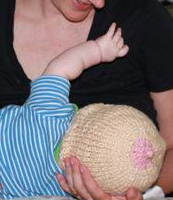
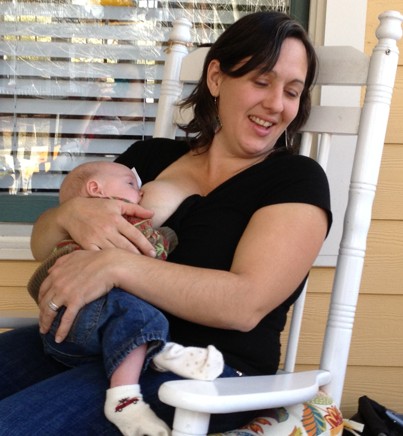
No, breastfeeding is not normal to us. In a culture where it was normal, this picture would be cute and sweet, not shocking.

But there’s a reason the mommy wars are so relentless. It’s because mothers can’t win. Because as abnormal as normal breastfeeding looks to most of us, formula feeding is, in some circles, just as shocking. People say equally ignorant things.

Formula is poison. Right. So is alcohol, fast food, coffee, gluten, red dye #40, sugar, high fructose corn syrup, dairy, non-organic meat, and Diet Coke. You’ve probably eaten some of those at some point. You’re still alive.

You just didn’t try hard enough. Yes, well, you didn’t try hard enough to hike the Appalachian Trail, learn Chinese, and become a successful entrepreneur. What, you didn’t even try to do those things? What’s wrong with you?

You’re just lazy and you’re putting yourself ahead of your child. If you’re bottle-feeding a baby. But, of course, this is also true if you’re breastfeeding a toddler. Because you can’t win.

But I can imagine what it would be like if we could all win. If we could really stop judging each other. If we could become blind to methods of baby feeding, and stop even noticing how another woman is feeding her child. Why should you notice or care if I’m breastfeeding my four year old? Why should I notice or care if you’re bottle feeding your four month old? What makes someone else’s parenting (short of abuse) anyone’s business?

Look, in most cases, breastfeeding is the healthiest, most organic, most ecologically-friendly option, just like organic meat and cloth diapers/EC and furniture made from sustainably harvested bamboo. And maybe in an ideal world, we all — or at least most of us — would get to enjoy all those things. But we don’t live in an ideal world. We don’t all have time to do EC. We don’t all have money to buy organic bamboo furniture. And we can’t all breastfeed.

And that’s okay.

Want to know a valid reason for not breastfeeding? Because you and your family don’t want to.

Want to know a valid reason for breastfeeding your preschooler? Because you and your child want to.

So how about we make a deal? How about we all stop even noticing whether another mom is whipping out a boob, a bottle, a sippy cup, or a snack? How about we all stop worrying about other people’s parenting choices? How about we let each family decide on their own version of normal?

How about we agree that we are all doing our best, and that makes us mom enough?

Like this post? Follow me by email!
 

7 warning signs your child may be spirited

toddler robot

Spirited kids. You’ve heard of them, right? It’s like high-needs, only it sounds better. Instead of saying they’re needy or sensitive or quirky or (heaven forbid) difficult, we say they’re spirited. Whatever that means.

What it actually means is they’ll be a holy terror to their parents till some indefinite age far in the future when they gain enough maturity to focus their intensity, at which point they will invent electricity or the internet or solar-powered airplanes. Whichever of those hasn’t been invented yet. I’m not really sure, because my brain is fried. Because I’m the parent of a spirited child.

Don’t get me wrong. Spirited kids are special. They really are. They’re brilliant and funny and energetic and creative and intense. My daughter amazes me with some of the stuff she can do. She does paintings that belong in the High Museum (and I swear that’s not just her mom talking. I don’t even like art). She learned to read before she turned four. And her current life plan is to start a business building robots. When she’s five.

But also? She is really hard to parent. And I’m pretty sure most of the time I’m doing it wrong. If your kid is spirited, you know exactly what I mean. The parenting techniques that are supposed to work with kids — that do work with most kids — don’t work with them. We parents of spirited kids have to ignore the experts and figure out what works for our kids.

Sound familiar? Maybe these will too:

1. Your child doesn’t sleep. Not as a newborn, not as a toddler, not as a child. This isn’t necessarily a bad thing, unless you’re the parent and you have to stay awake with them to make sure they don’t try to fry some eggs for a midnight snack or climb to the top of the china cabinet to get that glass vase down and see what it sounds like if they hit it against the floor (because they would. Do that). Do intense kids just need less sleep? Probably not. The problem is that they’re too smart. They’re thinking so much, so fast, that their brains can’t slow down enough to sleep.

Best way to deal with it? Distract them from themselves. Our daughter listens to audiobooks while she falls asleep. They stay on all night long. At full volume. Which yes, we can hear in our room. But she stays in bed. Totally worth it.

2. Your child’s tantrums are longer and more intense. Every toddler throws tantrums, right? But there are tantrums and there are tantrums. When my daughter was two, she never threw tantrums. Not anything I considered a tantrum, anyway. She’d get upset, and I’d breastfeed her, and she’d calm down. But she made up for it when she was three.

It’s normal for a three year old to throw a fit because you gave her the “wrong” kind of juice. But if your three year old throws a fit because you filled her cup three-quarters full instead of half-full of orange juice, and dumping out the excess doesn’t help, and the screaming continues for three straight hours, and then just as it starts to slow down it starts again because you put her cup on the wrong spot (even though you put it exactly where it had been a minute before), well, then she might be spirited.

Solution? I don’t know. Hide. Give yourself a time-out in the closet. At least then she’ll be pounding on the closet door instead of hitting you.

3. Your child hates change. This is also normal for young children. But I’m talking any change. Even expected changes that happen every day, like the transition from waking up to eating snack. Lots of kids have trouble with transitions. But if every little step in your day seems to take three times longer than it takes for other friends with kids (don’t even bother comparing to yourself before you had kids, because that doesn’t count), then you might  be dealing with spirit. If just getting into the car seat requires an elaborate transition ritual involving a story, a song, a dance, a sticker, and precisely six Cheerios counted out one by one, then you might be having more than normal difficulty with change.

Your response? Count the darn Cheerios. Trust me. It’s easier than the alternative.

4. Your child never gives up. This is a good trait. Really. One they have in common with Winston Churchill, Batman, and the Little Engine That Could. This is the reason why spirited kids become adults who change the world. But in the meantime, it will drive you nuts. They will wear you down. When they decide they want something, they will beg and beg for days. Actually weeks. And they’re like elephants — they never forget. Six months later, they’ll see that same toy in the grocery store and start crying because they still want it.

Solution? Stay strong, my friend. Stick to your guns. And never, ever say no unless you really, really mean it. Learn to say “maybe” or “we’ll see” or “let’s talk about it” unless your real answer is “over my dead body.” Because if your child decides he really wants it, he will Beg. You. To. Death. Choose what hill you want to die on.

Because when it comes down to Parent vs. Spirited Toddler? My money’s on the toddler.

5. Your child is highly focused. When he wants to be, that is. Every once in a while, his interests will align with yours, and then life will be really easy for a while. But most of the time, he will be highly focused on spreading his artwork all over the kitchen floor while you are trying to make dinner. Don’t worry. You’ll learn to work around it. And whatever you do, don’t interrupt. I know you think he’s just making a mess. But really he’s painting the Sistine Chapel. How do you think Michelangelo would have reacted if the pope had told him to clean up his scaffolding at the end of every day? He would have thrown a tantrum too. And then the pope would have gone to hide in the closet.

6. Your child’s schedule is unpredictable. I remember when my play group started planning meetings around everyone’s nap schedules. I was like, nap schedule? You mean you actually know when your child is going to take a nap? I couldn’t begin to guess when my daughter was going to sleep. Or wake up. It was different every day.

Can you put a spirited kid on a schedule? You can try. I spent a lot of time googling “ideal schedule for such-and-such age” and then trying to follow it. I even tried waking her up at 8 in the morning so she’d then (theoretically) be ready for a nap at 1. Then I’d try for two hours to put her to sleep, and she’d fall asleep at 3, when her nap was supposed to be over. At which point I had to decide whether to wake her up so she’d (theoretically) be ready for bed sooner or let her sleep and know that she’d be going to bed late. And by “late” I mean “after midnight.” After which I had to decide whether to wake her up again at 8 the next morning.

But hey, highly creative people often sleep less, right? Especially when they’re in the middle of a project. At 18 months, she was probably already planning that robot business.

7. Your child has a lot of energy. All kids have more energy than adults. This is because they are parasites who draw energy out of their parents like vampires suck blood. But some kids can spend a day playing at home in the yard and still go to bed that night. My daughter cannot stay home. She has to go out somewhere she can run, jump, play with other kids, and throw heavy things. A “relaxing” day at home will end with one of us climbing the walls. Either she will climb the walls to get to the bottle of Elmer’s glue I put on a high shelf because she wants to make a costume by gluing her favorite dresses together, or I will climb the walls as an alternative to hiding in the closet. So I can watch the chaos from a safe distance.

Do spirited kids ever outgrow their intensity? No. But they do learn to handle it better. Most of the time. Really. My daughter is so much easier now than she was a year ago. She can listen to reason (sometimes). And she can sit still and focus on things like putting together snap circuits or gluing 3,000 sequins onto a piece of paper one by one. Someday, your child will gain some measure of control over that intense energy.

Till then, the best thing to do is enjoy the ride. And be patient. And keep telling your child that you love her no matter what, even when she’s mad and throws a tantrum and hits you and when you trip on the artwork she left lying all over the floor. And then do yoga breaths in the closet.

And also? Keep reminding your kid that when she does start that robot business, she owes you one.

I am so gonna score a free robot.

Like this post? Follow me by email!
 

the feminist guide to attachment parenting

working-mother
There’s a conflict among mothers today, and it’s got nothing to do with oppression from the outside. No, the modern oppression of women is much more subtle. It’s from the inside. The mommy wars don’t pit one mother against another — they pit a mother against herself.
 
The problem? Feminism was supposed to give us choices. But in reality all it gave us was guilt. Instead of offering us a path to choose freely among good options, it’s given us an obligation to do it all. And it’s not working. In the attempt to balance work and family, we’ve kept the wage gap, increased our stress, and driven quality women out of the workforce. This is not working. Let’s try something else.
 
Like what, you ask? Here’s my proposal: a feminist manifesto for attachment parents. For those of us who want to eat our cake and have it, too. These are the goals I’d like to set for the feminist movement of my generation.
 
1. Guaranteeing paid parental leave for every family. I won’t even say a year of leave, although that would be awesome, because a year is a long time to stop working. Some industries change a lot in a year. But in an ideal world, mothers would have ample time to recover from giving birth, and babies would be able to stay home until their immune systems are a bit more mature. So let’s say twelve weeks of guaranteed leave, paid for by the government, which parents can split between them as they see fit. Heck, even six weeks would be nice. And yes, you can raise my taxes for that. Please.
 
2. Creating workplaces that welcome babies. Here’s where attachment parenting comes in. Sling babies are extremely portable. There is no reason why a baby under six months — maybe even up to a year — cannot come to work with you. Most babies will be happy just hanging out in a sling most of the time. You do not need to pay attention to them or entertain them. They’re perfectly entertained just looking at your face, and they don’t make any more noise than your annoying coworker who’s constantly telling unfunny jokes. Oh, and yes, I have done this. I taught writing classes for middle and high school kids when my daughter was six months old. My classes loved her. Was she sometimes disruptive? Sure. There were times when she distracted my students. But never for long. And she also provided lots of inspiration for their creative writing assignments.
 
3. Normalizing breastfeeding. This would make #2 a lot easier. A society that truly normalized breastfeeding would have no problem with a baby in a sling breastfeeding through a board meeting, or a meeting with a client, or a discussion with a coworker. It would be no big deal. And it shouldn’t be. We as a society need to just get over our discomfort with it. And also? Plenty of women think it’s fine to go to to work dressed like this:

Most breastfeeding women show less than that.

 
4. Offering flexible work and childcare. Like working from home — which usually makes most people more productive, and is better for the environment since it eliminates your commute — and part-time options for those who don’t want to work full-time. Or what about sharing a single job between two parents, so they each work 20 hours a week and have complementary schedules so one of them is always available for the kids? And onsite childcare for toddlers who are too old to be quiet in the sling but too young for school. And giving parents time to visit their kids during the day. Even just being able to spend lunch break with your child would make a huge difference in work-life balance and satisfaction for a lot of working parents. An hour with your kid that isn’t stressed by evening exhaustion and bedtime prep? Wouldn’t that be nice?
 
5. Building tribes. Parenting has become such a solo job. And usually a solo woman’s job. It shouldn’t be. In the majority of human cultures throughout history, babies have been raised by tribes. Grandparents, uncles, aunts, friends, and siblings have all taken turns caring for babies. Mothers weren’t expected to be “tied down” with their babies every minute of every day, but they had the option to be available to their babies while also doing other things. In an ideal world, lots of adults would be willing to take turns caring for each other’s children. Because you know what? For most people, a few minutes or an hour taking care of a baby can be a fun break from work. But doing it all the time, alone, 24/7 is exhausting. Heck, why couldn’t onsite childcare be shared among parents who all work in the same office? Eight parents each take one hour to watch each other’s kids. With kids of different ages, it wouldn’t be that hard — the older ones would help with the younger. If I had a work arrangement like that, I’d gladly work an extra hour — on weekends if necessary! — to make up the time. Wouldn’t you?
 
Is all this possible? I don’t know. But I think that if aimed for these goals, then maybe we could create a world where our daughters wouldn’t have to choose between work and children, between money and happiness, between love and power. I realize I’m creating a false dichotomy, and that for many families, this choice is an easy one. Some women don’t want to work, and some women don’t want to be with kids all day. But a lot of us would like to have both. Is it unreasonable for me to hope that my daughter will be able to have it all? Probably. But isn’t that what every parent wants for their child?

Like this post? Follow me by email!
 

frugi giveaway and coupon code

giveaway logo

Rainbows. I love rainbows. Don’t all moms love rainbows?

And also polka dots.

How about organic cotton rainbows and polka dots?

How about organic cotton rainbow and polka dot baby clothes?

How about organic cotton rainbow and polka dot baby clothes that fit over cloth diapers?

Now I’ve got your attention.

So I have this organic cotton bodysuit with rainbows and polka dots to give you. It’s size 18 months, but since it’s designed to fit over cloth diapers, so it’s bigger than your average size 18 month bodysuit. Here’s a comparison shot of it next to a Carter bodysuit:

So you could probably fit it on your small two year old. At least I’m pretty sure I could have fit it on my small two year old. Back when she was two.

It’s made by Frugi, a UK-based company that makes organic, ethically manufactured, fair-trade clothes for babies and kids. With really beautiful bright colors. And super-soft cotton that’s great for babies with eczema or sensitive skin. And I mentioned that they’re designed to fit over cloth diapers, right?

A couple things I really like about this bodysuit (or “babygrow,” as they call it in the UK):

1) It has snap openings down both legs. No more manipulating your baby’s leg to squeeze it into the leg of the suit that doesn’t unsnap. A really annoying feature of bodysuits that’s enough to make you give up on bodysuits forever. But not Frugi bodysuits.

2. The sleeves have a soft cuff that can fold over your toddler’s hands, just like newborn bodysuits do. In case you’re worried your toddler’s hands will get cold. Or if your toddler still scratches her face while sleeping.

3. It’s really soft, even unwashed. I’m sure it will only get softer with time.

So. If you have a baby that is younger than 18 months, enter to win with a comment below! Use the Rafflecopter widget to record your entry. Get extra chances to win by following Organic Baby Atlanta and Frugi on Facebook and Twitter.
Read more »

Like this post? Follow me by email!
 

how organic is your birth control?

birth-control

In the immediate postpartum period, birth control is easy. Almost too easy. I’ve discovered the perfect method: simple, cheap, and 100% effective. It’s called abstinence.

Because no woman wants to have sex immediately after giving birth. And usually not for some time after.

But at some point, trying to continue this method can become extremely expensive, because it will cost your happiness and possibly your marriage. So you have to switch to something else. If you’re like me and your babies will never under any circumstances take a bottle or a pacifier, then it’s easy to switch to lactational amenorrhea, which you’re doing anyway. But this method is only reliable when your baby is less than six months old. And even though you know your period (and fertility) is unlikely to return till your baby is closer to 14 months, you don’t want to risk it.

But you’re also not entirely certain that you don’t want any more kids.

So around the time your baby is four months old or so (like Teddy is now), you start thinking what I’m thinking: which type of birth control should you use?

I wish I could convince myself to just go on the mini-pill. I really do. But the idea of polluting our water supply with artificial hormones every time I pee freaks out my inner environmentalist. And the idea of polluting my body with artificial hormones freaks me out even more. My poor body has been through enough. What with pregnancy and childbirth and all. It deserves a break.

So it’s definitely non-hormonal methods for me. My favorite, which goes right along with my organic, natural-living, be-one-with-your-hippie-body mindset, is the Fertility Awareness Method. Which, believe it or not, is actually 98% effective when used perfectly. The trouble, of course, is that there’s a whole lot of room for use error.

However, we’ve used it before successfully (and used it to get pregnant when we wanted to, too). The trouble? It’s impossible to chart when your period hasn’t started yet. And although you can use FAM to watch for signs of returning fertility, it’s easy to miss. Definitely not 98% effective.

So I need a back-up method, at least until I can start charting again.

The copper IUD seems to be the method of choice among my mom friends for non-hormonal birth control. Which sounded great when I first heard about it. Sure, it has to be inserted by a doctor, but that’s okay — I love my doctor. Once it’s done, you don’t have to think about it anymore. And it’s 99% effective.

And then I read the list of common side effects and complications, which includes heavy bleeding, backache, expulsion, perforation of the uterus, and infertility. Seriously? I almost think I’d rather have an accidental pregnancy.

And also? An IUD is a copper and plastic stick that stays in your uterus. Like, forever. Until you have it removed. Why does this completely gross me out? Oh — because it’s gross. And scary and kind of disgusting.

Yeah, accidental pregnancy is looking better all the time.

So that brings me to barrier methods. Male condoms — kind of a pain, and bad for the environment since they’re not reusable. Female condoms — ditto. So I think I’ve narrowed it down to either a diaphragm or a cervical cap. Both of which sound okay. You don’t throw them out, so they don’t create waste; you can get set up in advance, so they don’t interrupt the action (like spontaneity is a priority when you have two young kids, but whatever), and they don’t sound too uncomfortable.

I’ll narrow it down with a talk with my doctor.

In the meantime, all this has brought me to one inevitable conclusion: women get the short end of the stick when it comes to birth control. Somebody should really develop a safe, effective, non-hormonal, reversible birth control method for men. Like yesterday. Actually, if that could be available in the next two months, that would work great for me. Ecological breastfeeding will get me by till then.

Like this post? Follow me by email!
 

5 baby sleep mistakes you don’t know you’re making

zombie vs baby

Sleeping through the night. It’s the ultimate goal of the early parenting years, the Holy Grail of baby experts. The road to a full nights’ sleep is a mountain you climb, armed with swaddling blankets, pacifiers, and coffee, until at last you reach the top and get to experience an uninterrupted REM cycle. And then you feel rested. Until you hit the preschool night terrors, which will disturb your sleep until you reach the grade school overcommitment anxiety wakings, which will keep you up till your kid’s a teenager. At which point you will never sleep again.

But in the meantime, you really need at least a couple of nights.

So, you do what the experts tell you to do. You make sure your baby isn’t overtired. You try to follow his emerging nap schedule. You put him down drowsy but awake. You try bedsharing, cosleeping, and sleeping alone. You try every sleep prop on the market, from mobiles to heartbeat teddy bears. But no matter what you do, your baby won’t sleep all night. Why?

I hate to break it to you, but the real reason he won’t sleep all night is because he’s not supposed to. Contrary to everything that experts, other parents, and your own exhausted brain tell you, babies are not supposed to sleep all night. Most babies don’t. If their parents tell you otherwise, chances are they’re lying. (And to everyone who is about to comment and tell me that their baby really does sleep all night: of course I’m not talking about you. You are more rare than you think. Please stop making the rest of us feel even more tired than we already are.

Unless you’re lying, in which case I am talking about you.) 

So is there any hope for sleep-deprived parents? Maybe. Sometimes, the best solution to lack of sleep is a zen mindset of acceptance and patience. Eventually, your baby will not need your help to go back to sleep. Even if he’s an adult insomniac, someday it won’t be your problem any more. In the meantime, you might feel better if you can avoid some of the mistakes I made.

1. Fighting the normal patterns of human sleep. I bet you didn’t know it’s normal for humans to wake at night. In fact, in the Middle Ages (before the invention of electricity and consequent late bedtimes), everyone expected to be awake for a while in the middle of the night. Medical texts of the time refer to the “first sleep” of the evening and “second sleep” after midnight, which were separated by a period of wakefulness. (Most medieval experts recommended using this time for “contemplation and prayer.” Which is probably pretty good advice for us parents, too. You can use the time to pray that your spouse will wake up and take a turn already.) So when your baby wakes up at 2 am and wants to play, he’s not experiencing day-night confusion. He’s just experiencing modern world confusion. His body hasn’t figured out the invention of electricity.

Is there anything you can do about this? Not really, other than keeping the lights off and avoiding playtime as much as possible. But it might make you feel better to know that it’s normal. Unlike your eleven o’clock bedtime.

2. Fighting the baby’s instinct of self-preservation. If you are trying to get your baby to sleep apart from you, you’re fighting your baby’s instincts. Which isn’t to say you can’t teach your baby to sleep alone if you want to. Just be aware that it may be an uphill battle. Unlike some mammals (think bears, wolves, and rats), human babies are not designed to be left alone at all. Ever. Like kangaroos and monkeys, they expect to be carried continually and fed constantly throughout the day and night. A baby left alone will cry because its instincts tell it that any time it doesn’t feel the physical contact of an adult body, it’s vulnerable to predators. So if your baby doesn’t want to be set down, ever, don’t call him high-needs. Call him a person with a strong survival instinct. This is a child who is going to make it through the zombie apocalypse.

3. Misunderstanding the causes of night nursing. Most babies who wake at night want to breastfeed. If they’re not breastfeeding, they want a bottle or a pacifier. This is not necessarily because they’re hungry. It’s because sucking releases calming hormones that help your baby sleep. If you think the nighttime feedings are motivated by hunger, you might be tempted to try starting solids to get your baby to sleep better. But this usually doesn’t work. After the newborn stage, most babies aren’t eating at night because they’re hungry–unless, of course, they’re reverse cycling, or in the middle of a growth spurt, or in a wonder week, or too busy learning to crawl to eat during the day, or getting more exercise and needing more food. Ok, so maybe they are hungry. Who knows?

All of which is to say: it’s hard to know why your baby is waking at night. But just as with anything else, if you try to stop night waking with a solution that doesn’t address the real reason for the wakings, it’s not going to help.

But you could try sucking your own thumb. The calming hormones work for adults too.

4. Wanting a single magic solution. It’s easy to think that if you could just figure out the right solution, your baby would start sleeping all night, every night. In reality, it’s never that simple. There are thousands of reasons why babies wake at night, and sometimes the only real solution is time. It’s frustrating when your neighbor or friend keeps telling you that such-and-such solution is the magic answer to every parent’s sleep problems. But just because it worked for their baby doesn’t mean it will work for yours.

Which isn’t to say you can’t try. The more solutions you try, the better chance that one of them will work, at least for a while. As long as you don’t feel strongly opposed to a particular solution — say, letting your baby cry for long periods — it’s worth a shot. Try The No-Cry Sleep Solution, which has a nice method for reducing the suck-to-sleep association, or Healthy Sleep Habits, Happy Child, which has a lot of different ideas for different parenting styles, or Sleepless in America (my absolute favorite book on sleep), which has a lot of solutions for high-needs babies. Oops, I mean babies with a strong survival instinct.

Or, you could try this magic baby sleeping pill.

5. Thinking you can solve night waking once-for-all. Sleeping all night — or at least going back to sleep without help — is a developmental ability that every child achieves eventually. But even if your child does it once, that doesn’t mean he’ll do it regularly. With most developmental milestones, we expect this pattern. If your baby rolls over once, you say he’s achieved that milestone — even though he may “forget” how to do it and not do it again for weeks. Ditto for walking, talking, and climbing to the top of the bookshelves when you’re not looking. Sleeping long stretches is the same. Most babies will do it once or twice just to tantalize you with the knowledge that they can right before they hit another growth spurt and start waking again because they’re actually hungry. Or because they’re teething and in pain. Or because they had a nightmare. Or because they know you’re in a deep sleep and they want to test your zombie survival skills, which include the ability to wake up quickly in response to sudden noises.

The bright side? You will survive this. Really. On the other side of the mountain of sleep deprivation, there’s a green valley full of bright flowers, peaceful streams, and long nights of sleep. Someday, you’ll look back on the years of night waking and remember them like something in a dream. (Actually a nightmare.) “Sleep problems?” you’ll say, shaking your head like a war veteran. “Let me tell you about sleep problems.”

Yes, it’s hard to imagine now, but someday, your baby’s sleepless nights will be a distant memory. You’ll remember them with something almost like nostalgia. I did it, you’ll say to yourself: I survived the zombie years.

Like this post? Follow me by email!
 

which type of postpartum body do you have? (and tips for getting a healthy one)

postpartum belly tiger stripes

Don’t you hate women who look gorgeous postpartum?

Okay, maybe hate is the wrong word. I don’t hate you. Really. I envy you. Actually, I might hate you. Especially if you claim that some simple activity, like running after your toddler, breastfeeding, or cleaning house “makes the weight melt right off.” First of all, if you’re running postpartum, even after a toddler, then you are in way better shape than I am. I am four months postpartum and I am not going to be doing any sort of running any time soon. Ditto for any housework that might get my heart rate up. And breastfeeding? Ha. Tandem nursing a preschooler and a baby while also pumping occasionally? Does not make me skinny. I think it makes me fat.

I keep telling myself that my body is awesome, that I’ve grown two children, and that it takes at least nine months to gain the weight so you should expect nine months to lose it. (With my first pregnancy it took me three years to lose the weight, but whatever. Same diff.) Still, I can’t help but compare myself to other women with young babies. And I’ve noticed that most of them look better than I do. Which is okay, I swear. I can make up for it with my glowing personality. And my postpartum girdle.

I’ve also noticed that even though we all look a little flabby and weird postpartum, we have different types of flabby and weird. Here are some that I’ve noticed.

1. Flabby in the belly, skinny everywhere else. If this is you, people may think you’re still pregnant. Which probably drives you crazy, but it’s actually a compliment. Because pregnant women are gorgeous. And you look gorgeous. You have a little belly left — so what? At least your thighs aren’t rubbing together every time you take a step. You have defined arms and muscular legs. Give your body a little time, and the belly will probably melt away to nothing. Women with this postpartum body are usually muscular people who exercised a lot before pregnancy. If this is you, then your version of “fat” is skinnier than my version of skinny. So be happy. Don’t mind your belly. Appreciate your muscular arms.

2. Fluffy everywhere, but with curves. Another gorgeous option. Sure, you don’t look like an airbrushed model in a magazine. But you look motherly and womanly and beautiful. Really, you do. At least you have curves. This is a good thing. Moms with this body are usually small-boned women who are used to being super-skinny everywhere, so it may feel weird to have all those curves. But you should enjoy it. Curves are not a bad thing.

3. Round everywhere. That’s me. Round face, round body, round thighs, round everything. My husband has started calling my belly my “third (and biggest) boob,” which would be funny if it weren’t so true. Hey, it’s all good. Like I said, curves are not a bad thing. Even if they only curve out and never curve in. And at least I have an adorable round baby to show for it.

But no matter how wonderful your postpartum body is, chances are you’d like to change it a bit. Or at least get somewhere close to the weight you were pre-pregnancy. Or at least not stay at a weight exactly ten pounds below what you weighed the day you gave birth (which is apparently what my body would like to do). And despite the fact that I am far from an expert on this, I have at least done it once. So here are my tips on losing weight postpartum.

How to Get Your Pre-Pregnancy Body Back

First of all, you can’t. Especially if you were really skinny and had a flat stomach. You will never have a completely flat stomach again. Okay, maybe you will if you are a supermodel and hire a personal trainer, but for most of us, it’s just not possible. And even if it is flat, you will always have those stretch marks. But that’s okay. Trust me on this: after nine months of pregnancy belly, and however-many-months of postpartum belly, you can be happy with your body again. And it won’t take as much as you think. After my first pregnancy, I went on a diet for the first time in my life and lost all the baby weight — plus ten more pounds. I was extremely happy with my body. (Apparently my husband was too, because then he immediately got me pregnant again. Jerk.)

Anyway. Losing weight postpartum is a delicate issue, one that I hesitate to even talk about, because the fact that we’re so eager to do it diminishes the beautiful awesomeness of what our bodies have done during pregnancy and birth. However, I know that for me, staying at the weight where my body would like to settle postpartum is not really healthy. For some reason, my body wants to settle at about 30 pounds over what I consider my healthy weight. A weight that, according to the CDC, puts me squarely on the top end of the overweight category, just barely under obese. (I blame this on the fact that I’m so dang short. Short people are screwed in the BMI index.) But height aside, I don’t think it would be healthy for me to stay at my current weight — although it’s perfectly healthy for four months postpartum. So. I’d like to take a little less than three years to lose the weight this time (one year would be nice), and here’s how I plan to do it.

1. Eat real food. Or, as Michael Pollan says, Eat food. Not too much. Mostly plants. In other words, avoid processed food. Avoid the middle of the grocery store and do most of your shopping on the edges. The hard part about this is that when you’re taking care of a newborn, you really need lots of snacks that you can eat with one hand. But that doesn’t have to mean granola bars and crackers; real food options are plentiful. Vegetables with hummus and grapes are my current favorites.

2. Eat raw food. I used to always have a side of cooked (usually stir-fried or steamed) vegetables for dinner. Recently, I started serving raw vegetables with dip instead. It’s much healthier and much easier to prepare. Bonus? Anastasia is much more likely to eat it. My husband loves it too. Frequently, I’ll put it out as an afternoon snack for me and Anastasia and just leave it sitting on the table till dinnertime. Then it’s one less thing to worry about in the witching hour chaos that is dinnertime.

3. Limit desserts. If you’re good at this sort of thing and you can resist your sweet tooth in a way I never can, then you should skip dessert entirely. Or, you know, have a bowl of strawberries and call that dessert. I can’t do that. Sometimes I just really want ice cream. My solution? Only eat dessert on the weekends. It’s a lot easier for me to resist temptation on Tuesday if I know I can have chocolate ice cream and a mocha on Saturday. When I lost 30 pounds after Anastasia was born, I counted calories all week and then ate whatever I wanted on the weekends. It worked. At first I indulged a lot on the weekends, but over time my sweet tooth got less greedy, and I enjoyed healthy food more and more. But it was really helpful to have the mental break every weekend of not worrying about counting calories. It made for a diet I could stick to.

4. Eat protein. Protein is great when you’re trying to lose weight, because it fills you up. Diets that make you feel hungry are bad. Especially when you’re breastfeeding a newborn. Sometimes, it’s okay to be a little hungry in order to lose weight, but postpartum not one of those times. So eat protein. Red meat is actually really good too, because it has lots of iron, which breastfed babies (and breastfeeding moms) need. Chicken is a great source of protein with not too many calories. It’s especially good to eat protein for breakfast — that helps you feel more full all day. When I was serious about dieting after Anastasia, I started eating a hard-boiled egg for breakfast every morning. I’d boil them all on Monday and eat them throughout the week.

5. Exercise in a way that works for you. You actually can lose a lot of weight without exercising (I didn’t do any intentional exercise to lose my 30 pounds after Anastasia was born), but it’s easier and healthier to do it with exercise. Some people love exercise, but if you’re one of those people, then you probably don’t need this post. If you’re like me and you hate exercise, then the key to exercising postpartum is to find a way that works for you. This may be joining a gym with great childcare, because then exercise becomes a break from the kids instead of a chore to accomplish. You will find yourself eager to go to the gym every day because it means you get to take a shower by yourself. Suddenly, you will love exercise! But if you can’t afford a gym, or you aren’t happy with the childcare, or your baby is miserable even though the childcare is awesome, then you need to find a different option. It could be as simple as walking to the playground every day with the baby in a carrier (which is what I do), or it could be a regular walking group with other moms, or a postpartum exercise class (preferably one where babies are allowed to come). You can also get mom and baby exercise videos that show you how to use your baby as a weight for exercise. (Just don’t try those with your toddler or preschooler around. Seriously. You do not want to do push-ups with a toddler sitting on your back.)

Most importantly, though, you should recognize the beauty of your postpartum body. Your body created life and sustained it for nine months. That’s worth a few flaws. Even permanent flaws. No matter if you lose the weight or not, no matter what you look like a year from now, or even ten years from now — you are gorgeous. You are a mother. And that is one of the most beautiful things in the world.

Hey! Don’t forget to enter this giveaway to win a free organic pizza! Which is not raw. Or unprocessed. But at least it’s organic. And easy to prepare. It can be your weekend indulgence meal. Only two more days to enter! 

Like this post? Follow me by email!
 

Switch to our mobile site